Will the Glamping Bubble Burst in the UK?
What Site Owners Should Do Next
Glamping isn’t about to disappear—but the “easy growth” phase has clearly cooled. For most UK operators, the bigger risk isn’t a dramatic bubble burst. It’s a market split: distinctive, well-run sites can still win bookings and hold rates, while generic offers face tougher competition, price pressure and more unpredictable occupancy.
This article breaks down what the latest demand and supply signals suggest, the real risks for operators, and practical steps to strengthen your proposition—especially through better outdoor living and guest experience (where Moorlands Garden Furniture can help).
1) What the market is telling us: softer demand, not a collapse
UK domestic trips remain a priority for many guests, but value sensitivity is rising. In February 2026, 78% of UK adults said they intended to take an overnight trip in the UK within the next 12 months—down from 81% a year earlier. The biggest barriers cited were the cost of living, personal finances and British weather.
At the same time, “caravan, camping and glamping” trips have eased from the post-pandemic peak. In 2024, trips involving those accommodation types fell 15% year on year and 24% compared with 2022. Even after that reset, they still represented 9% of overnight trips in England—evidence of a sizeable and durable market segment rather than a disappearing trend.
| Signal | What’s happening | What it means for operators |
| Domestic trip intent | 78% intend to take an overnight UK trip in the next 12 months (Feb 2026), down from 81% a year earlier | Demand is still there, but guests are more selective and more price-aware |
| Barriers to booking | Cost of living, personal finances and British weather lead the reasons people hold back | Value perception and weatherproof comfort become key differentiators |
| Camping/caravan/glamping trips | Down 15% year on year in 2024; down 24% vs 2022, yet still 9% of overnight trips in England | A “normalisation” after the peak; strong sites can still perform well |
2) Has the market become overcrowded?
In some regions, yes—particularly where lots of similar pods, bell tents or domes launched quickly to capture the staycation wave. Recent platform indicators suggest a more competitive environment: supply increased only modestly (around 2.8% on one major curated platform), while demand rose strongly—yet there has also been a “thinning out” as some newer or less differentiated sites struggle to stand apart.
One revealing metric: among owners leaving that curated collection in 2025, 14% were selling their sites, up from 6% in 2024. That doesn’t mean glamping is failing overall; it suggests that weaker propositions and rushed launches are more likely to exit when trading gets tougher.
There are still optimistic outlooks in the market. Some consumer research claims that 60% of UK adults have either been glamping or intend to do so, and longer-range forecasts continue to project UK glamping growth through 2033. Treat big forecasts carefully, but taken together they support a balanced conclusion: glamping is maturing, not collapsing.
| Bottom line: the market is splitting into “can’t-wait-to-book” experiences and “easily substituted” accommodation. Your goal is to be in the first category. |
3) The real risks for UK glamping operators
Below are the risks most likely to shape performance over the next few seasons. None are fatal on their own—but together they reward operators who are deliberate about positioning, quality and profitability.
- Price resistance — Guests are watching spend closely. Premium rates can still work, but only when the value is obvious: comfort, privacy, strong reviews, thoughtful design and “nothing to worry about” practicality.
- Too much “samey” supply — A unit type alone is no longer a destination. Many areas now have plenty of similar-looking offers, which increases direct comparison and pushes sites into competing on price.
- Weather and seasonality — British weather is a stated barrier to booking. Sites reliant on summer weekends can be exposed to a wet school holiday period or a weak shoulder season.
- Rising operating costs — Cleaning, laundry, utilities, repairs, staffing, insurance, finance and marketing can squeeze margins quickly, especially for smaller sites that can’t spread fixed costs.
- Guest expectations — “Back to nature” doesn’t mean “hard work.” Guests may accept rural settings, but not poor mattresses, unreliable heating, muddy access, tired furnishings or outdoor areas that feel neglected.
| What’s changed: guests are comparing harder and asking “Is this worth it?” more often. Your site must answer that question quickly—through photos, reviews, and the lived experience on arrival. |
4) Practical ways to reduce risk (and increase bookings)
The most resilient sites do a few fundamentals exceptionally well. Use the checklist below as an operator-focused plan for the next 90 days and the next 12 months.
- Define a niche (be specific) — Choose an audience or occasion and design the experience around it: romantic escapes, dog-friendly breaks, family adventure stays, wellness weekends, farm experiences, walking/cycling bases, dark-sky stargazing, or small-group celebrations.
- Upgrade the guest experience—before adding more units — Improve what guests notice, use and review: bedding, lighting, storage, check-in clarity, cleanliness, and especially the outdoor “liveability” of the pitch or deck.
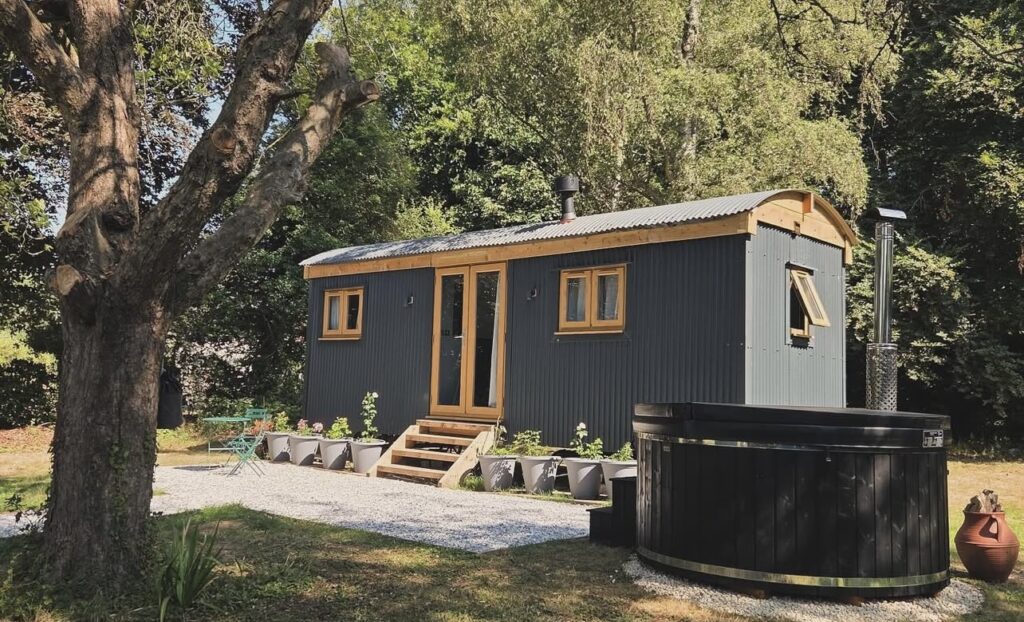
- Make outdoor living a standout feature — Treat external space as part of the product, not an afterthought. Comfortable seating, a proper dining set, a sheltered area and a fire pit zone can turn a stay into something guests photograph, remember and recommend.
- Use flexible pricing (protect revenue without constant discounting) — Set seasonal and day-of-week pricing. Build appealing midweek offers and shoulder-season packages, and add margin-friendly add-ons (breakfast hampers, firewood bundles, pet packs, guided local activities).
- Prioritise shoulder seasons — Invest in comfort and weatherproofing: reliable heating, insulation, covered dining/terraces, and durable outdoor furniture that still feels premium in colder months.
- Own the customer relationship — Reduce reliance on third parties by growing direct bookings: email sign-ups, gift vouchers, repeat-stay incentives, post-stay offers and a consistent review strategy.
- Watch local competition (but don’t race to the bottom) — Track nearby rates, availability, reviews and new openings. If others drop price, double down on what’s hard to copy: privacy, design quality, outdoor space, service and “effortless” comfort.
- Stress-test the business — Model the numbers if occupancy dips, rates soften, or costs rise. Phase capital projects where possible and keep a realistic cash buffer.
| Outdoor space upgrade | Guest impact | Commercial benefit |
| Quality dining set (table + comfortable chairs) | Enables “outdoor meals” moments and better photos | Supports premium pricing and stronger reviews |
| Weather-ready seating (durable, easy-care, comfortable) | Makes the space usable more often, not just on perfect days | Improves shoulder-season conversion |
| Thoughtful layout (zoned dining + lounging + fire pit) | Feels designed and intentional—less “temporary pitch” | Creates differentiation versus nearby “samey” sites |
| Moorlands Garden Furniture tip: aim for an outdoor set-up that looks premium in listing photos and feels comfortable in real life. “Designed outdoor living” is one of the easiest ways to make your site less substitutable—especially when many competitors offer similar accommodation units. |
The verdict: maturing market, clearer winners
The UK glamping market doesn’t look like it’s heading for a dramatic burst. What we’re seeing is a reset from peak conditions and a shift toward a more mature, competitive environment—where guests book later, compare more and demand clearer value.
For site owners, the opportunity is still real: build a distinctive proposition, deliver effortless comfort, and design outdoor spaces that feel genuinely premium. The sites that win will be those that are easiest to choose—and hardest to replace.
If you want to strengthen your guest experience through better outdoor living, Moorlands Garden Furniture can help you plan durable, hospitality-suitable outdoor seating and dining that supports year-round use and a more “premium” feel on arrival. Check out our ranges here