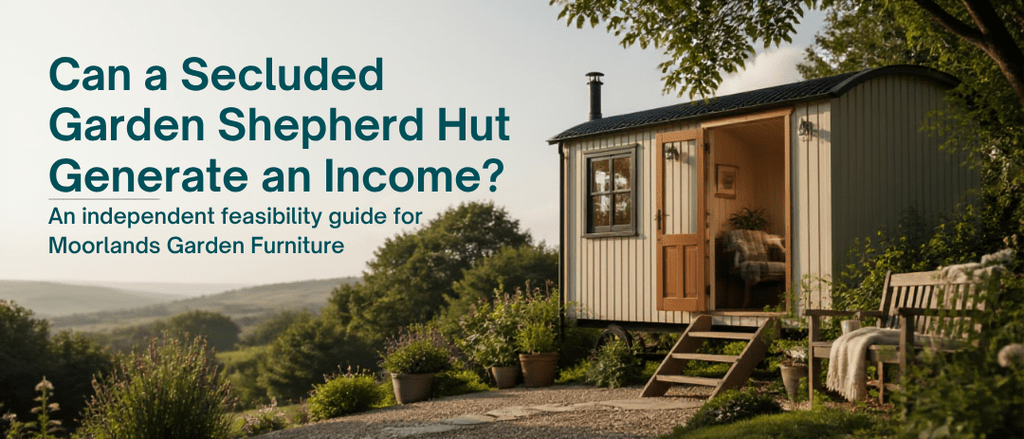
Can a Secluded Garden Shepherd Hut Generate an Income?
An under-used, secluded corner of a garden may offer more than storage or a quiet place to sit. With the right setting, specification and permissions, it could become an additional income stream through short-stay shepherd hut accommodation.That opportunity depends on several factors: local demand, planning requirements, site costs, the guest experience and the amount of hands-on hospitality involved. A hut should therefore be assessed as a small accommodation business, not as a guaranteed or passive return.
Important: This article provides general information only. It is not a guaranteed financial return or a substitute for planning, legal, tax, insurance or professional investment advice.
What do shepherd hut guests value most?
- Guests are not simply booking a compact place to sleep. They are looking for a change of pace, combining comfort, character, privacy and a sense of escape. The essentials should be planned carefully before decorative extras are considered.Comfortable bed and quality bedding — A supportive bed, good pillows and high-quality bedding provide the baseline for a positive stay and strong reviews.
- Private bathroom — An en-suite shower and toilet can make the accommodation feel genuinely self-contained and support a wider range of guests.
- Well-equipped kitchenette — Include practical basics such as cookware, crockery, glassware, a kettle, toaster and coffee-making facilities.
- Reliable insulation and heating — Good insulation and dependable heating are important for year-round comfort. A log burner may add atmosphere where it is suitable, safely installed and properly managed.
- Attractive private outdoor area — A patio, deck, seating area, planting and an appealing outlook help the experience extend beyond the hut itself.
- Privacy and peaceful surroundings — Guests should feel that the outdoor space is theirs, with limited noise, overlooking and interruption from the main house or neighbours.
- Thoughtful finishing touches — Towels, toiletries, robes, books, well-considered lighting and clear guest information can turn a functional stay into a memorable one.
Practical priority: Invest first in sleep quality, warmth, bathroom facilities, cleanliness and privacy. These foundations generally matter more than adding features simply because they appear in competing listings.
Which features influence the booking decision?
- Professional photography is often the first opportunity to communicate the experience. The main image should show the atmosphere clearly, while the full gallery should accurately represent the sleeping area, bathroom, kitchenette, outdoor space and views.Listings should also describe facilities and limitations honestly. Depending on the target guest and local competition, useful features may include:Access and parking — Separate access and convenient parking can make arrival simpler and help protect the feeling of privacy.
- Private outdoor space — A deck, patio or garden area gives guests somewhere to relax outside the hut.
- Setting and views — Countryside or garden views can strengthen the sense of escape when they are genuinely available.
- Cosy features — A wood burner or other suitable heating and comfort features may appeal to guests seeking a relaxing retreat.
- Practical connectivity — Wi-Fi can be important for some guests, even when the overall experience is designed to encourage a digital break.
- Dog-friendliness — Welcoming dogs may open a relevant audience, but only where the site, cleaning routine and house rules can support it.
- Easy arrival — Straightforward check-in, accurate directions and useful guest information reduce friction before and during the stay.
- Local reasons to visit — Walks, attractions, villages and local amenities can make the location more compelling.
Features should be prioritised rather than added indiscriminately. A couples’ retreat, a walkers’ base and a dog-friendly escape may each require a different specification, and local competitors will influence which improvements are most worthwhile.
Is privacy really that important?
- Yes, privacy is often a major part of the value proposition, particularly for couples, solo retreat guests and people looking for an escape from everyday routines. It can influence how special the stay feels, the price guests consider reasonable and the reviews they leave.Total isolation is not essential. A hut can still work near a main house or within a larger garden if the arrangement is honestly presented and the price reflects the level of privacy offered.Screening and separation — Use planting, hedging, fencing or natural levels to reduce direct views and define the guest area.
- Private use — A patio or deck should feel like part of the accommodation rather than shared family space.
- Independent movement — Separate access and clear boundaries can help guests feel comfortable coming and going.
- Low disturbance — Consider noise, light spill, activity around the main house and safe access after dark.
What income could a shepherd hut generate?
Rates and occupancy vary by location, season, specification, reviews, marketing and competition. A secluded hut with a private bathroom, kitchenette and appealing character may attract a different audience from a more basic garden room, but there is no single rate or occupancy level that applies to every site.The following examples are for modelling only. They show gross revenue rather than profit and are not a forecast.
| Example | Nightly rate | Occupancy | Booked nights | Gross annual revenue |
| Conservative | £110 | 35% | 128 | £14,080 |
| Established | £135 | 50% | 183 | £24,705 |
| Strong premium offer | £160 | 60% | 219 | £35,040 |
These figures help illustrate how nightly rate and booked nights interact. Actual performance would depend on the particular garden, the quality of the guest experience, the strength of demand and the owner’s ability to manage the accommodation consistently.
From gross revenue to potential profit
- Gross revenue is only the starting point. The costs to subtract may include:Initial investment — The hut purchase, delivery and positioning, groundworks and site preparation, utilities and drainage, furnishings and equipment.
- Operating costs — Cleaning and laundry, consumables, utilities, repairs and maintenance, and routine replacement of equipment.
- Business costs — Insurance, booking-platform fees, marketing, finance costs, taxes and professional or management fees.
An owner-managed model may retain more of the operating revenue, but it requires time for guest communication, cleaning, changeovers, maintenance and problem-solving. A fully managed model may be more convenient, but management fees reduce the amount available after costs.Simple ROI model: annual net operating income ÷ total investment × 100 = indicative ROI.
Payback period can also be considered by comparing the total investment with annual net operating income. Neither measure is meaningful without realistic assumptions for occupancy, costs, tax treatment and periods when the hut is unavailable.
Feasibility checklist before investing
- Before ordering a hut, check:Planning permission and change-of-use requirements with the local planning authority.
- Access for delivery, positioning, servicing and guests.
- Drainage, water, electricity and waste arrangements.
- Fire safety, insurance requirements and appropriate risk assessments.
- Parking availability and the potential impact on neighbours.
- Seasonality, local demand, nearby competition and achievable rates.
- Cleaning, laundry and changeover logistics between bookings.
- Whether you have the time or budget to manage guest communication and maintenance.
Professional planning, legal, tax and insurance advice may be needed before committing. Requirements can vary according to the site, the proposed use and local circumstances.
Use the Moorlands Garden Furniture ROI Calculator
The Moorlands Garden Furniture ROI Calculator can help readers test their own assumptions for nightly rate, occupancy, costs and initial investment. It is most useful when the inputs are based on a realistic assessment of the site, the target guest and the work required to operate the accommodation.Stress-test the opportunity using conservative, expected and optimistic scenarios rather than relying on one headline result. Compare how changes in booked nights, operating costs or initial investment affect the outcome.
Conclusion
A secluded, under-used garden can be a viable candidate for shepherd hut accommodation when it offers genuine privacy, an appealing setting, practical access and a strong guest specification. However, the opportunity depends on more than the hut itself.Privacy can support perceived value, but comfort, cleanliness, professional photography, positive reviews and operational discipline are equally important. The most realistic assessment combines expected income with the full cost of preparing, furnishing and managing the site.Before committing, test your own assumptions in the ROI Calculator and review the result alongside planning, site, operational and professional advice.
Download our latest brochure
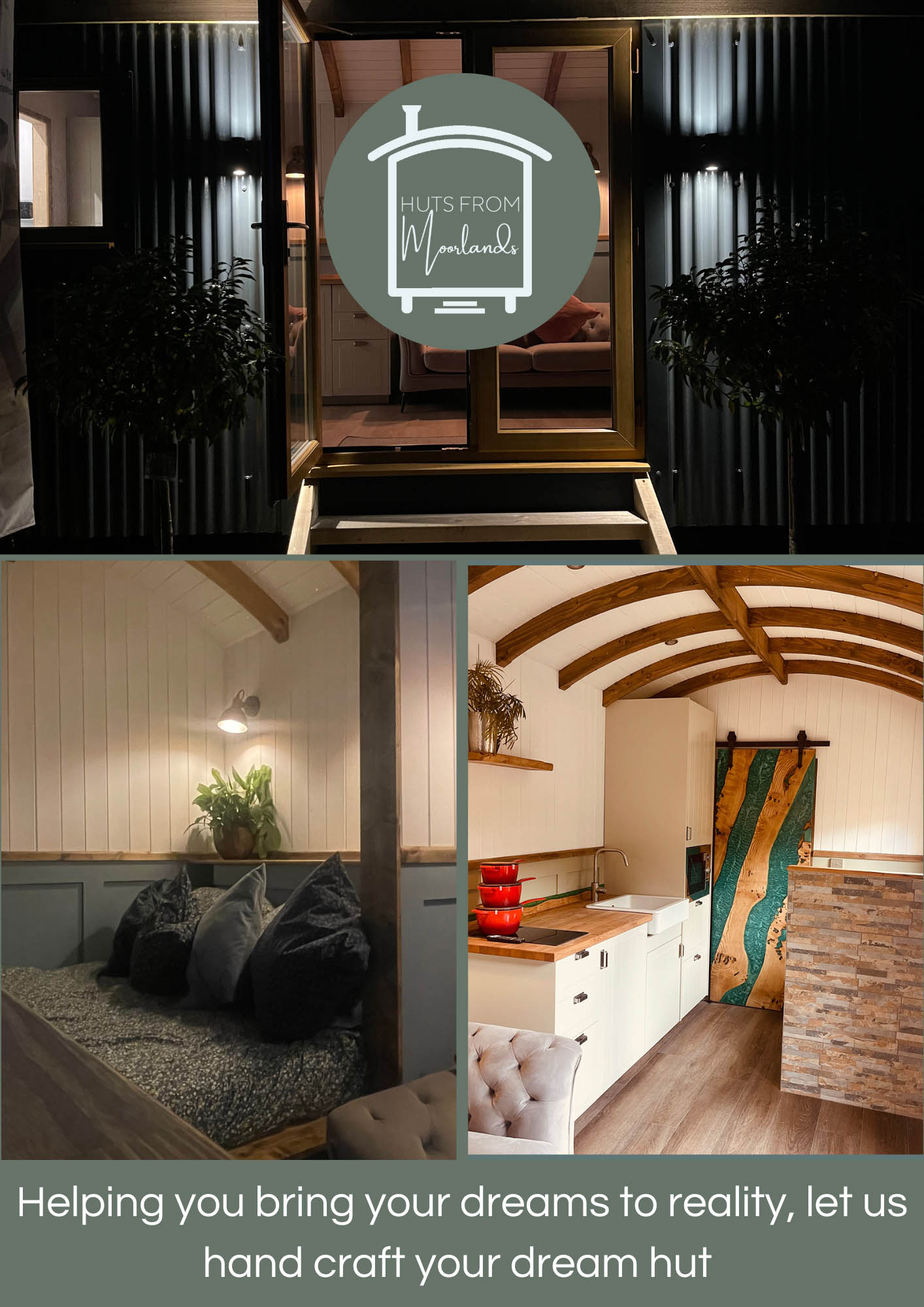
If you’re considering investing in a Shepherd’s Hut, we invite you to explore our latest brochure. Inside, you’ll find an array of our core turnkey designs along with self-build options. We can develop a solution to accommodate most budgets, and by collaborating with us, we can customise a plan that helps you realise your dream hut. Should you wish to discover more about our hut crafting process, we would be delighted to welcome you to our workshop, where you can view our finished huts and those currently under construction. Please reach out if this sounds interesting to you.